
Root Canal Treatment
Root canal treatment has a reputation for being painful — in practice, modern anaesthesia makes the procedure itself far more comfortable than most people expect. Here's how it actually goes.
What this includes
Three ways we make root canal easier.
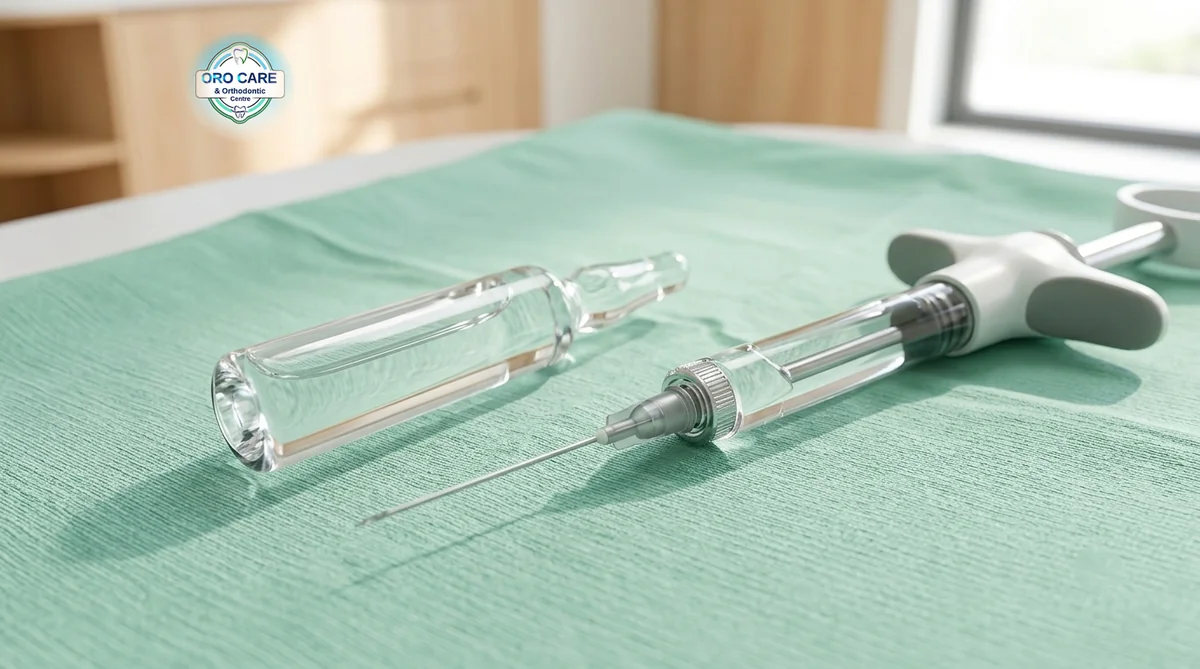
Painless Root Canal Treatment
Modern local anaesthesia and gentle technique mean the procedure itself is far more comfortable than its reputation suggests.
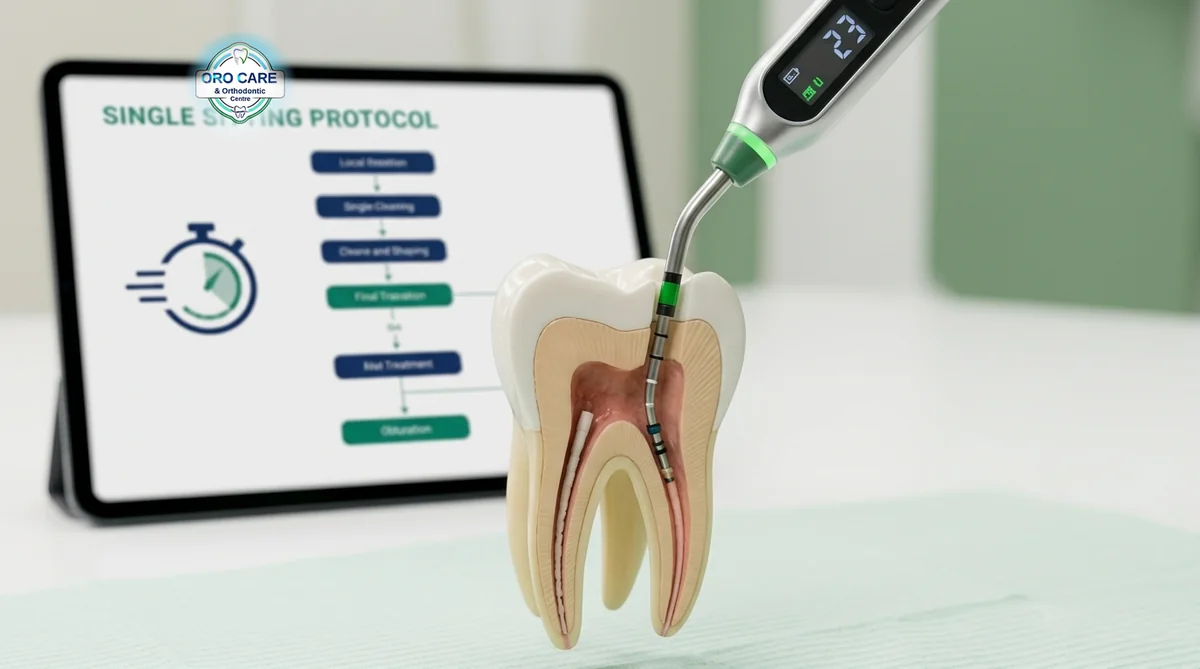
Single Sitting Root Canal Treatment
For straightforward cases, cleaning, shaping and filling the canal can often be completed in one visit instead of several.
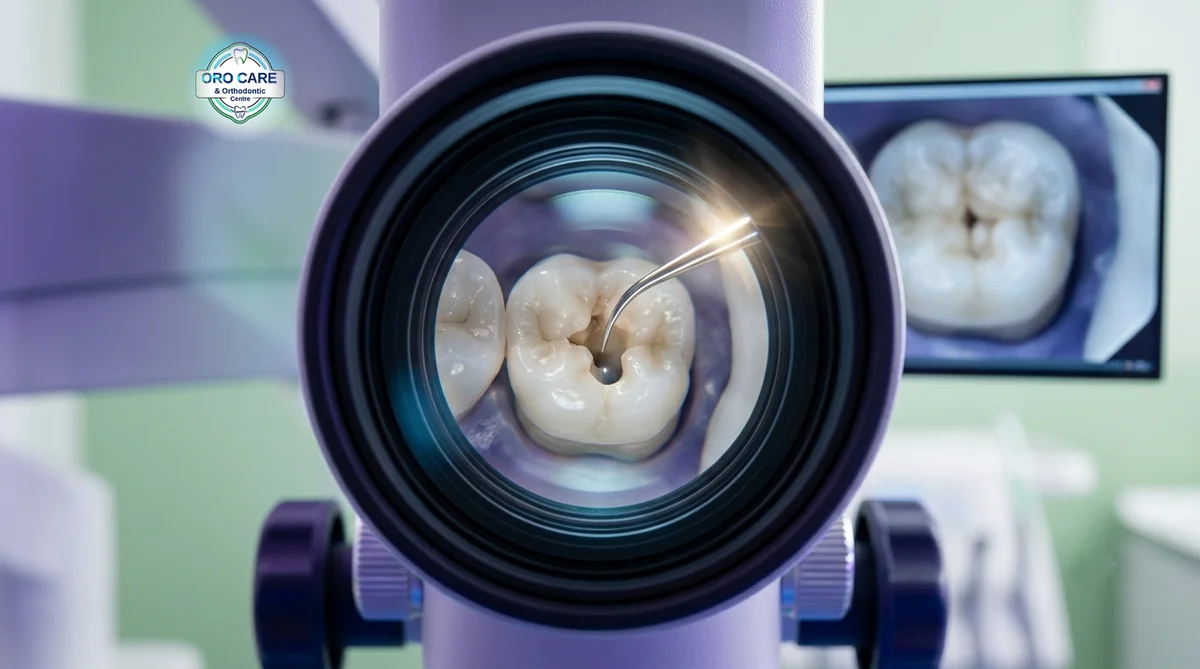
Microscope-Assisted Root Canal Treatment
Dental microscopes magnify the canal system so we can locate and treat even the finest, hardest-to-reach root canals precisely.
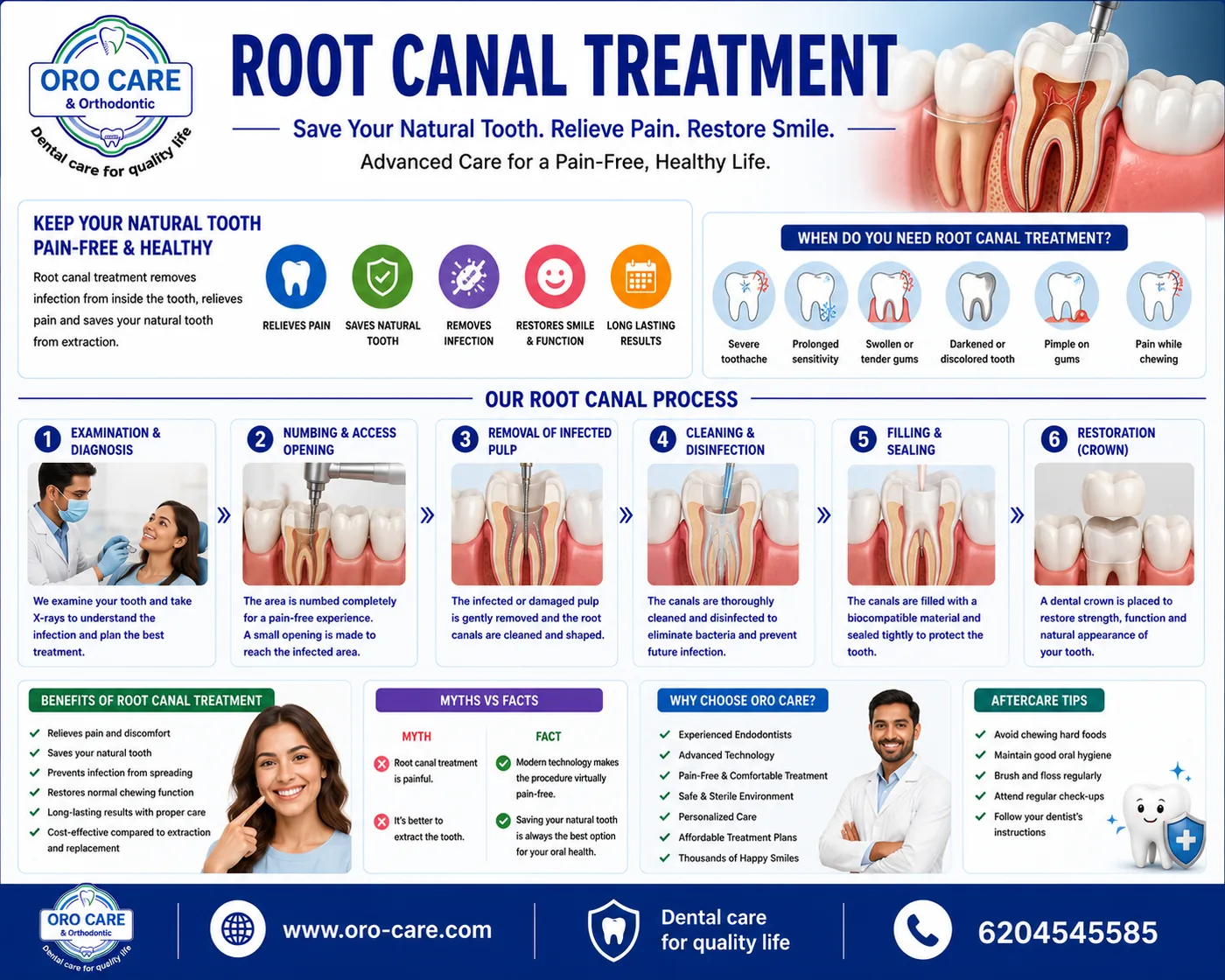
What to expect
How the process works.
Diagnosis
An X-ray confirms the extent of infection or damage inside the tooth, and whether root canal treatment is the right call.
Local anaesthesia
The tooth and surrounding area are fully numbed before anything begins — this is what makes the procedure comfortable.
Cleaning the canal
The infected or damaged pulp inside the tooth is carefully removed, and the canal is cleaned and shaped.
Filling & sealing
The cleaned canal is filled with a biocompatible material and sealed to prevent reinfection.
Crown placement
A crown is usually fitted afterward to protect the treated tooth, since it can become more brittle over time without the pulp.