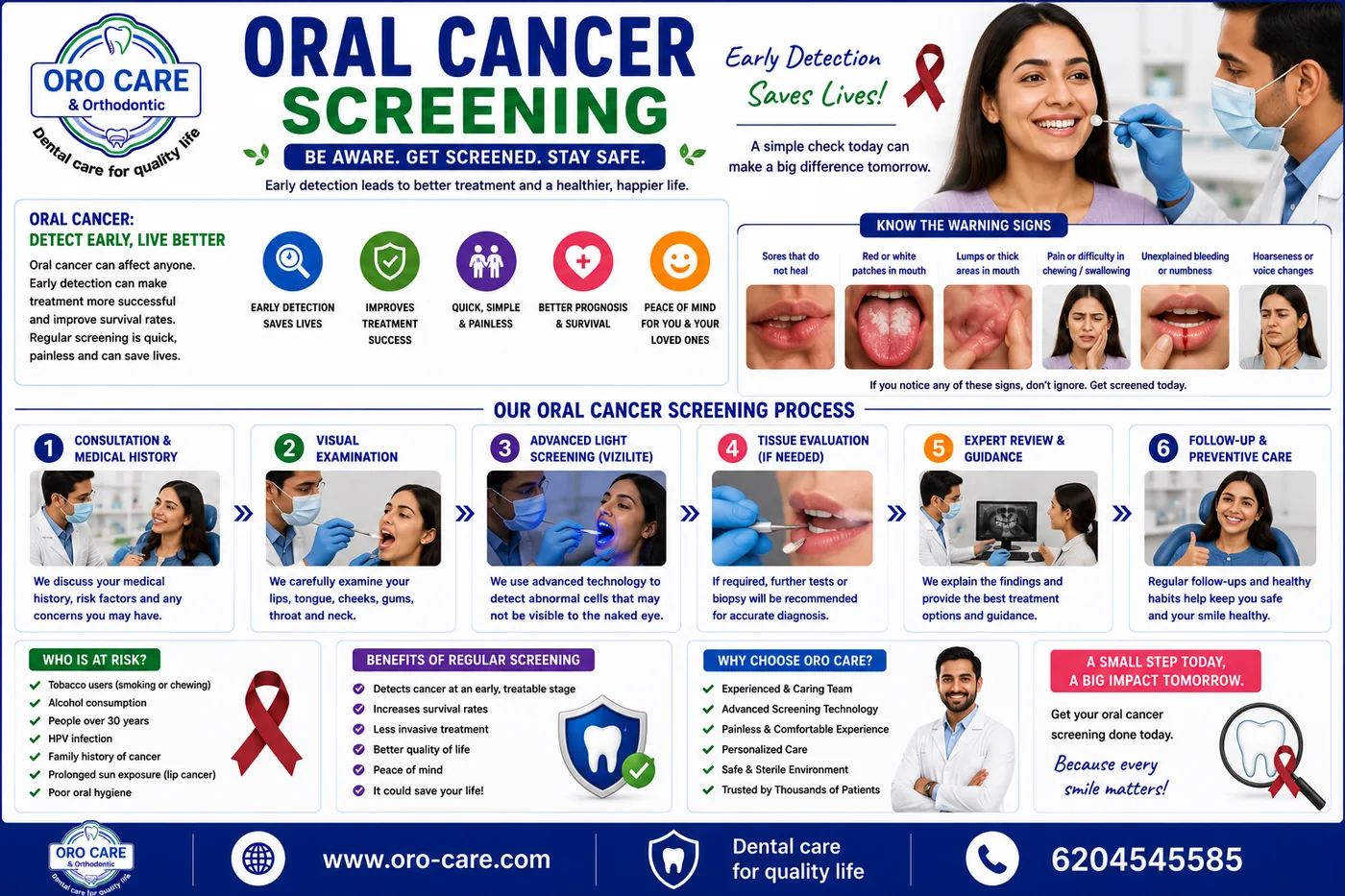
Oral Cancer Screening
Oral cancer is far more treatable when caught early — and a screening is quick, painless, and usually just part of a routine check-up rather than a separate appointment.
What this includes
Examination, Risk Review & Referral.
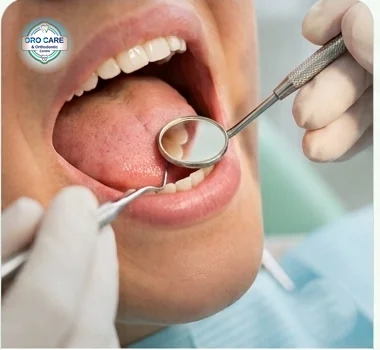
Visual & Physical Examination
A close look at the lips, cheeks, tongue and mouth floor, plus gentle palpation of the jaw and neck.
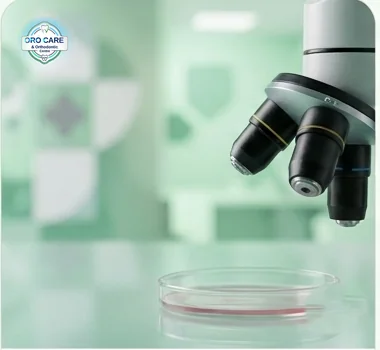
Pathological Assessment
A detailed lab analysis of any suspicious samples to identify cellular changes, providing precise diagnostic information for further care.
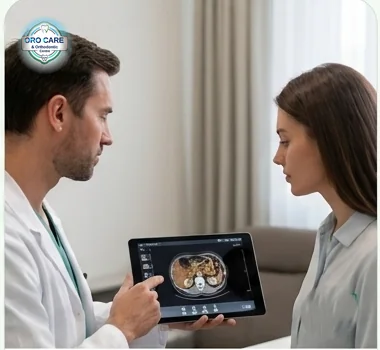
Biopsy Consultation
A one-on-one session to discuss biopsy procedures, risks, and findings, providing complete clarity and a personalised plan.
What to expect
How the process works.
Visual Examination
A close look at the lips, cheeks, tongue, floor of the mouth, and throat for anything unusual — white or red patches, sores that won't heal, or lumps.
Physical Examination
Gentle palpation of the jaw, neck and mouth to check for lumps or swelling that aren't visible on the surface.
Risk Factor Review
A conversation about tobacco use, alcohol use, and other factors that raise risk, so screening frequency can be adjusted accordingly.
Referral if Needed
Anything suspicious is referred promptly for a biopsy or specialist opinion — screening identifies risk, it doesn't replace diagnosis.
Follow-up
Regular screening at routine visits means changes are tracked over time, not just caught once.